
Looking Back: Theatre of Remembrance Through the Years
Anniversary milestones are always important opportunities for reflection and looking back on all of the growth and learnings from the years that have come before. As we prepare to celebrate 10-years of Theatre of Remembrance, the team are feeling nostalgic as we trawl through the archives of previous productions which have taken place across Europe, as well as looking to the future and thinking about how we want the project to continue expanding and having impact going forward.
For ten years, we have worked across borders with young people to strengthen the meaning of the commemoration of International Holocaust Remembrance Day on 27 January. Over the past two years, we have deepened our cooperation with European partners through exchange, dialogue, and mutual inspiration. Together, we have reflected on how the Second World War is remembered and processed within the different national contexts, connecting remembrance to the present day and recognising contemporary signs of radicalisation and the undermining of the rule of law. Through global pandemics and adverse weather conditions and all of the problem-solving that comes with staging productions, Theatre of Remembrance has found a way to connect with the young, the elderly and the general public.
Read on as Andrada Şimo-Mosk (Creative Producer @ Theater Na de Dam) and Rachel Hameleers (Artistic Director @ founding Theatre of Remembrance partner ACADEMY Berlin) reflect on the legacy of the project and plans for the future.
Andrada’s memorable performances
One of the most memorable Theatre of Remembrance performances for me was I STAND STILL and (get) move(d), by ACADEMY, Berlin. It turns remembrance into a lived, bodily experience rather than a distant lesson. Young Berliners make themselves vulnerable on stage, asking urgent questions (“Why am I making a performance about the Holocaust? What does it have to do with me? When is the feeling of guilt enough?”) and intertwining their reflections with the stories of women imprisoned in Ravensbrück. Flowing choreography, constant setting changes, and audience movement through space ensure history is felt in every square meter, inviting the audience to inhabit its ambiguity and moral urgency.
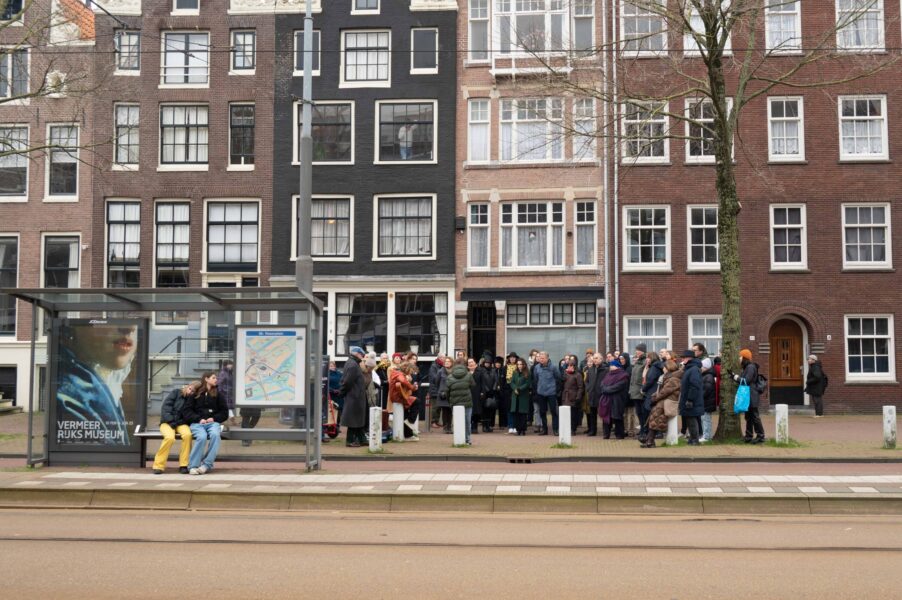
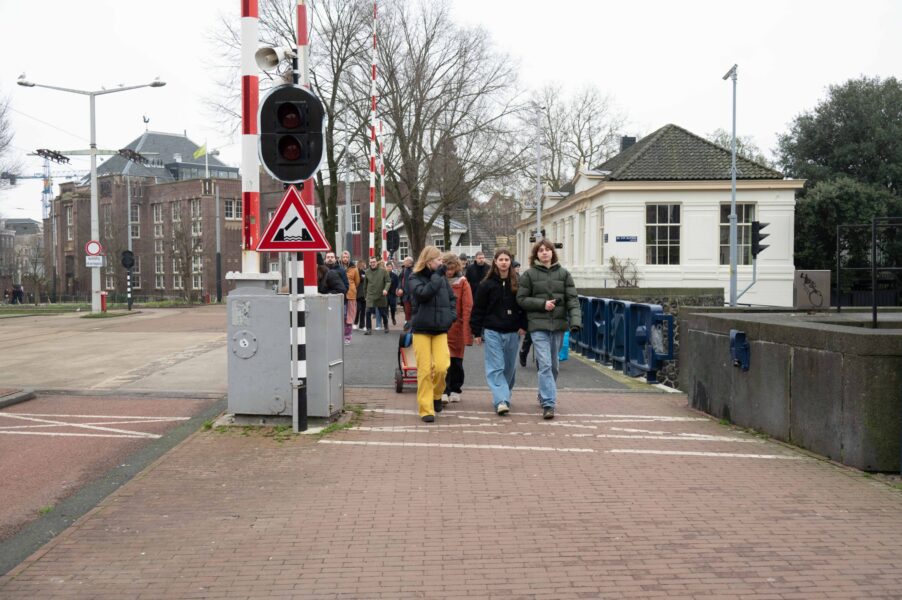
Another memorable example was Against Forgetting, a theatrical route through the streets of Amsterdam in January 2023. Young people led the audience on a cold winter’s day to De Dokwerker—commemorating the February Strike of 1941—and then to the Holocaust Namenmonument. What resonated was their determination to share stories that are still too often untold, communicating with confidence, urgency, and genuine care to connect Second World War history to the present day. Watching them grow as people and return each year to develop their communication, social awareness, and sense of responsibility is deeply moving.
„Remembrance can emerge from young people’s own initiative.”
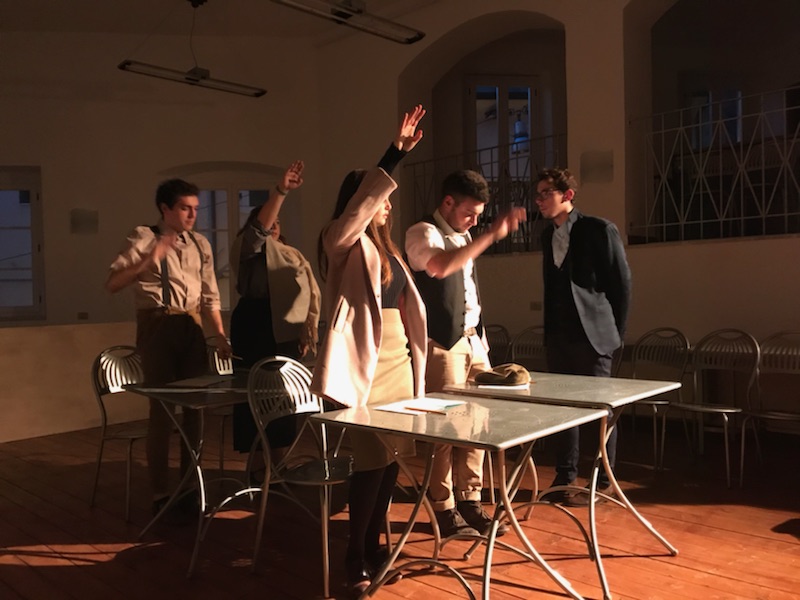
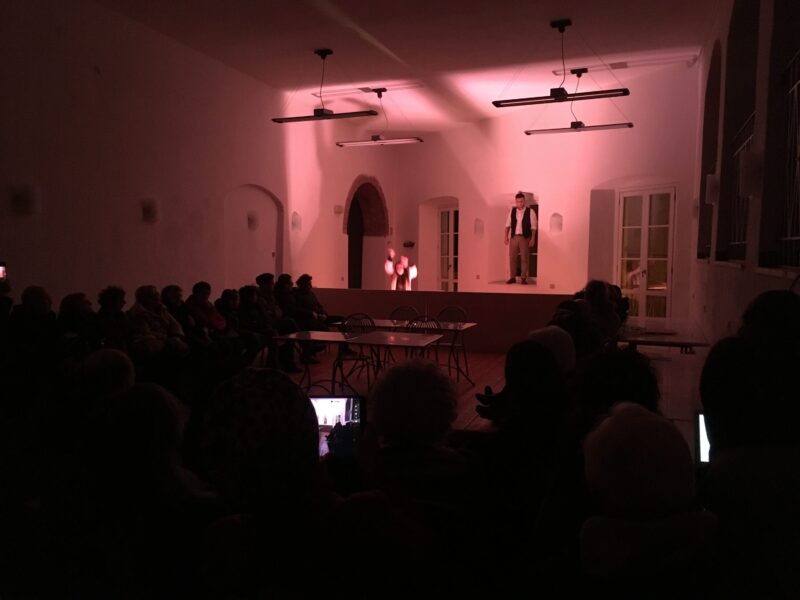
I see a similar quality in the young people in Carrara, who independently came together during the COVID-19 pandemic to create a moment of stillness and reflection for International Holocaust Remembrance Day. Though I haven’t seen this performance, it shows how remembrance can emerge from young people’s own initiative. They were actively asking what it means to remember and why that matters in their own time, demonstrating the continuing power of theatre as a form of reflection, connection, and social engagement.
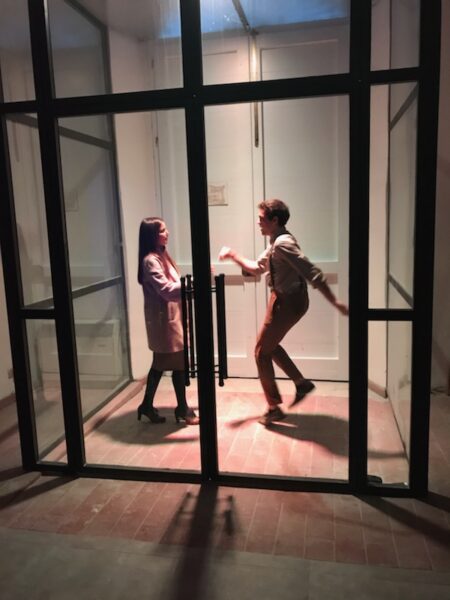
Rachel reflects on the decade-long collaboration between ACADEMY Berlin and Theatre of Remembrance
I clearly remember the first Theatre of Remembrance project with Jantien Fick. She came with Theater Na de Dam experience to work at our place and it was the first time I encountered these kinds of theatre projects. Until then, we had made lots of varied performances with youngsters, but never with the clear historical and political responsibility that belongs to Theatre of Remembrance.
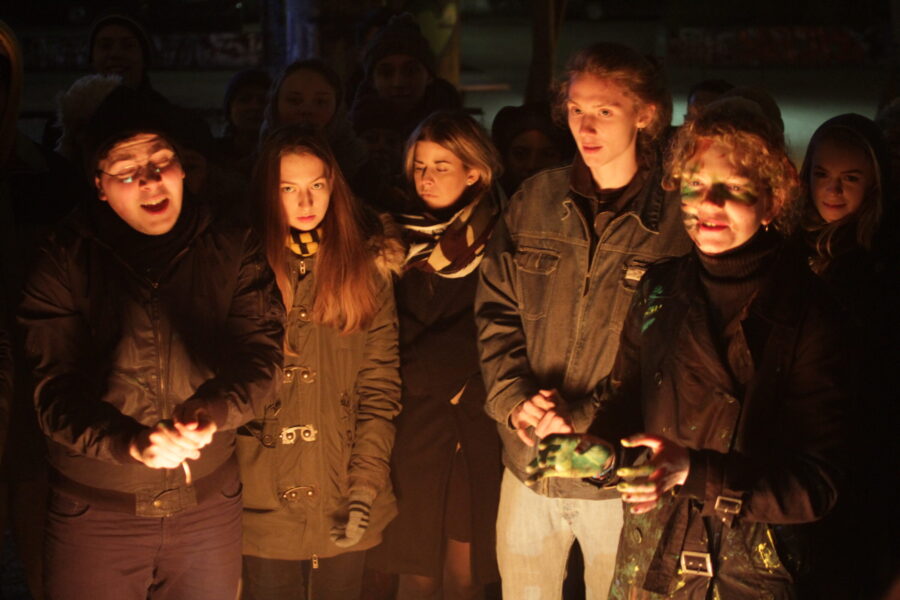
The historical events which inspired the performance were found very nearby, on our own courtyard (we work in a former fire station – the Alte Feuerwache) as there was a big collection of what was deemed ‘degenerate art’ by the Nazis burnt there in 1939. Jantien worked with the youngsters on this history and I clearly remember the beautiful fire they created for people to gather around, drink tea and exchange with the audience after the performance FEUER WACHT in January 2017. It was such a clear image. I felt it as a kind of healing fire for the place we work together.
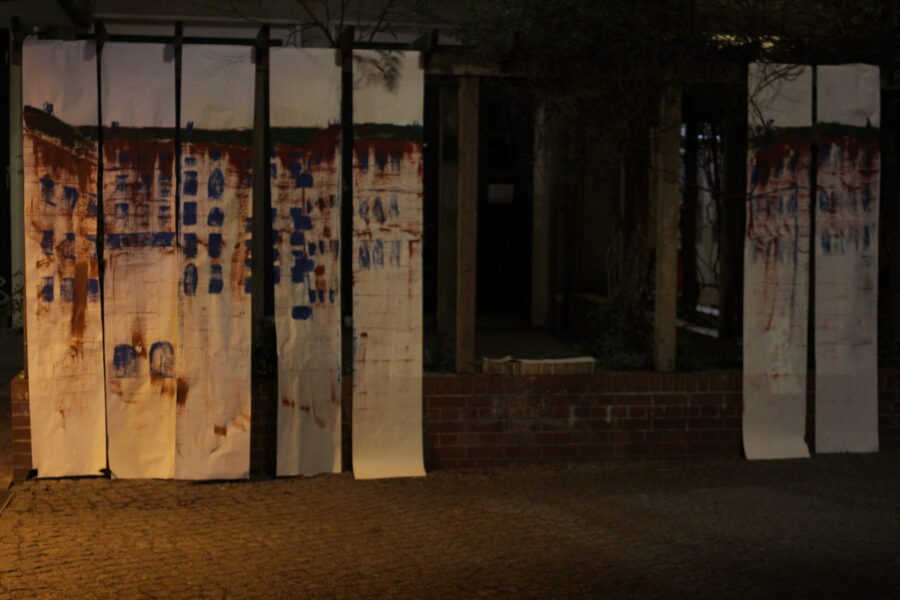
The second clear memory I want to share is the project RÜCKWÄRTS in 2022 made by Milena Sundari Nowak. In this project we cooperated with the Jewish Museum and had several workshops with Atalya Laufer, a museum guide and visual artist. Together we searched for different ways and forms of remembrance in the neighbourhood of the Alte Feuerwache. I discovered many new perspectives in my direct surroundings: a former synagogue next door I didn’t know of, art pieces that refer to history I unknowingly drove by. We also dug in to the stories behind the Stoplersteine in our streets. We had so much impressive input. It was a very intense process. We all had to learn so much about how to find theatrical forms to tell huge stories and how to translate our thoughts and feelings on stage in a way, the audience could relate to it.
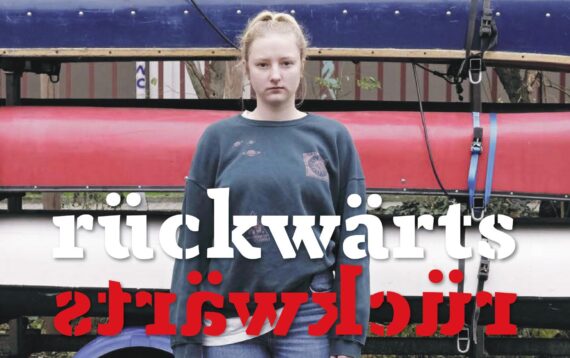
Of course „ICH STEHE STILL und rühre mich” (2025) was very special for me as it was the first Theatre of Remembrance project I worked on with Milena Sundari Nowak as a theatre maker (until then I was involved as a producer, coach and artistic advisor). For the first time, I asked myself, how I would like to create a performance with youngsters about such a big, painful, important and also incriminating topic. Especially in Berlin, in Germany, where all youngsters extensively learn about it in school and the feelings of guilt are still tangible. Together we chose for a very clear focus: the history and the stories of women and girls in the Ravensbrück concentration camp, near Berlin.
We created an open inspirational workshop and programme which lasted a whole month, before starting to work with the ensemble. We traveled to Ravensbrück and in Berlin we invited many people to share their stories, knowledge and artistic insight to contribute to the project. Over a hundred of people were involved before we started creating the performance with the 18 youngsters, who signed up for the ensemble. The versatility of the process and the connection with the people was so positive and inspiring.
Looking forward: Rachel and Andrada’s hopes for the future
Andrada
„Through this process, young people discovered that their differences could be a source of strength and inspiration.”
In the pioneering years of the project, our main focus was on creating something meaningful with young people for 27 January. In recent years, however, learning from one another’s histories has become equally important. This experience has taught us that, although European countries share a collective history, each country’s specific context, history, and sensitivities strongly influence how the project is experienced by participants and audiences. A shared European framework is therefore important, but it must always leave room for local perspectives and personal experiences.
Another important lesson is that meaningful connection can be created even across large physical distances and in a digital setting. Our online meetings and inspiration sessions became a melting pot of ideas, languages, and cultures. During the online inspiration sessions, music and movement helped the young participants overcome language barriers, while personal stories and experiences were woven into a shared narrative.
Through this process, young people discovered that their differences could be a source of strength and inspiration. They came to know one another beyond stereotypes and prejudices, while developing empathy, cooperation, and mutual respect. Working towards a common artistic goal created a strong sense of connection and mutual understanding. This, ultimately, is the power of collective artistic work.
A two-year research project into the impact of Theatre of Remembrance on eyewitnesses, young people, and audiences in seven different languages confirmed many of the insights we had gained through practice. It demonstrated that the project’s artistic and international approach can create lasting opportunities for dialogue, strengthen social cohesion and encourage young people to engage critically with both the past and the present.

My hope for the future of Theatre of Remembrance is that it will bring together more young people from an increasing number of countries connected by the history of the Second World War. By engaging with personal wartime stories and the history of their own towns and communities, young people can develop into critical and engaged citizens—people who are prepared to stand up against injustice, racism, and discrimination, and to defend democratic values.
I also hope that Theatre of Remembrance can continue to demonstrate how socio-artistic practices can promote social cohesion. Giving young people the opportunity to work together on an artistic project, while engaging with personal encounters and the experiences of older generations, forges friendships and challenges prejudice. It shows how collaboration and creativity can build bridges between people and create communities in which everyone feels seen and heard.
In the years ahead, we and the participating artists will continue striving to ensure that young people are not only given a platform for their voices, but also experience a genuine sense of belonging. My hope is that this sense of connection will remain with them long after the final scene has been performed, inspiring them to remain curious, empathetic, and active in shaping a democratic and inclusive future.
Rachel
„History is not far away, but sometimes hard to connect to”
I learned so many lessons: first of all, how important this work is and how difficult. History is not far away, but sometimes hard to connect to. I learned that peoples stories are a very direct way to connect to history. I also learned, that it becomes far more complicated when you also look for the stories of the perpetrators. And I learned that these stories are important. I learned that I don’t think, it is a good idea to merely reenact historical scenes, but better to tell the stories (in a living museum) and to perform (act, move, dance) the stories and feelings of here and now. I learned (again) the power of sharing, of poetry, of standing still and being angry. I learned a lot about the power of fascism and how to recognise patterns in the world we live in today. I learned how the deep traumas of the Holocaust, stotalitarian regimes and war can impact society in the longterm.
I hope that we can go on with projects as Theatre of Remembrance and can learn from history. But I also think it is very important to look very critically to the world we are living today and to speak out. I hope – I keep hoping – I keep insisting – the history of Nazi Germany, the Holocaust, may never again be repeated. I hope we learn to make alliances within our communities to exchange thoughts and to act together when necessary.


